
Nanoparticles: what they are, types and applications

Nanotechnology is transforming many industries thanks to its innovative materials and processes. At Calpech, with more than 30 years of experience, we combine research and practical application to bring this technology to the environmental sector. Our multidisciplinary team works in engineering, waste management and biogas production, applying nanotechnology to create efficient and sustainable solutions.
At the heart of this revolution are nanoparticles, extremely small particles that possess unique properties because of their size. These characteristics make them very useful in sectors such as environmental remediation, energy and industry. Discover in this post what nanoparticles are, their main types, how they are manufactured and the most notable applications, especially iron nanoparticles, which play a key role in our field.
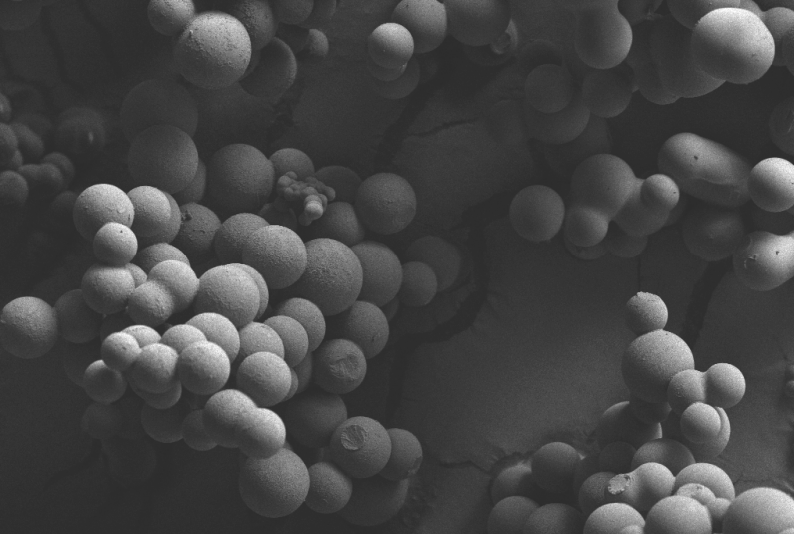
What are iron nanoparticles?
Until about thirty years ago, industrially manufactured materials had sizes larger than micrometers: sands, clays, cements, among others. However, as a result of the rapid development of nanotechnology, a new world full of possibilities has appeared.
Nanoscience or the science of matter at the nanometer scale (sizes around 10-9 meters or 1,000 times smaller than micrometric particles) is the field of knowledge that describes the analytical and processing techniques that allow control of the size and composition of matter at the nanometer scale, techniques that make it possible to understand and control the properties of matter at the atomic or molecular level.
This has enabled the emergence of materials with specific properties for their use or the production of progressively smaller devices. In the last 25 years, a wide variety of nanomaterials have been synthesized, among them nanoparticles, nanowires, nanotubes or nano sheets stand out. This series of new products have been applied in a wide variety of fields such as electronics, biomedicine, the energy sector or environmental damage repair. This leads us to ask the following question:
Why are nanomaterials so useful?
Because of their very small size, these materials possess unique chemical, catalytic, electronic, magnetic and optical properties. As particle size decreases, the proportion of atoms located on the particle surface increases, which is known as an increase in the particle’s surface area. These surface atoms often have an incomplete electronic structure due to a lack of electrons to stabilize them. This electron deficiency makes them very susceptible to interacting and reacting with other atoms and molecules to achieve a stabilized charge.
Compounds considered inert like silver, if produced at the nanometric scale, can be used to catalyze reactions, break down pollutants, produce antimicrobial sterilization, adsorb and separate dioxins, dyes and other organic contaminants or heavy metals. The list of possible applications of nanomaterials has continued to grow in recent years, especially in the treatment of soils, water and air.
A new nanoparticle: zero-valent iron nanoparticles (nZVI)
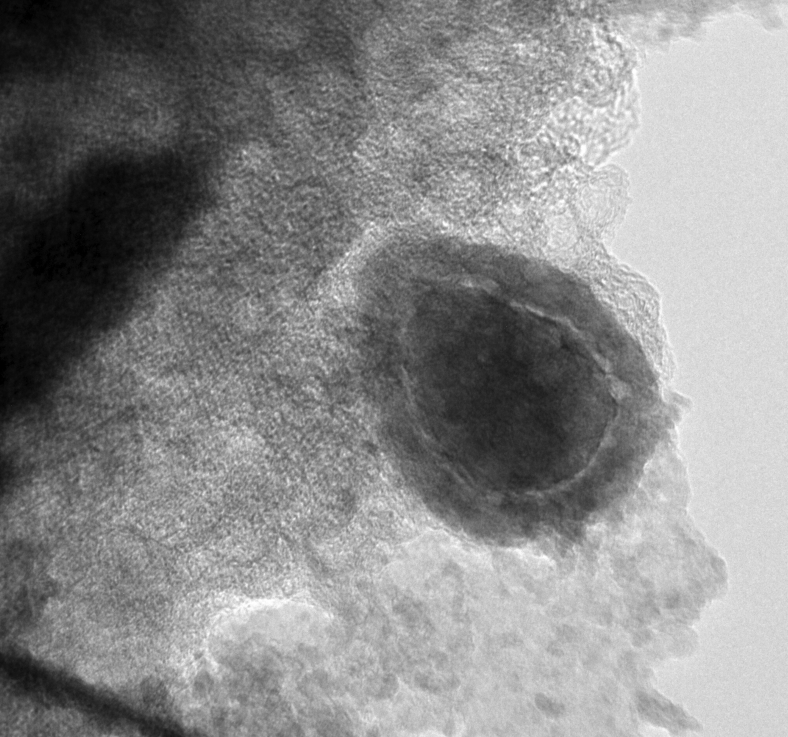
Among the various nanomaterials, those formed by metals have proven to be the most versatile and effective for removing contaminants from impurity-containing sources. Specifically, zero-valent iron nanoparticles are the most promising for environmental treatments due to their versatility, relatively low cost and high reactivity.
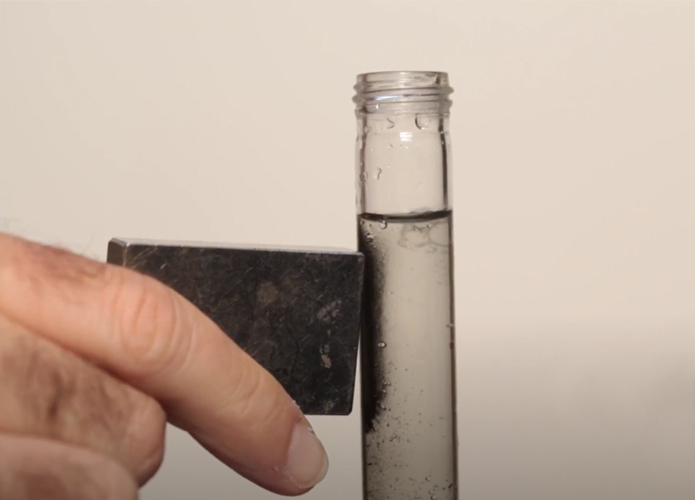
Iron is the most abundant transition metal and the fourth most common element in the Earth’s crust. In addition, it is a non-toxic, economical element with some reducing power that, having magnetic properties, can be easily separated from the medium after use by applying magnets.
An additional advantage is that the reaction products after its application as a reducing agent to remove contaminants are non-toxic iron oxides.
Zero-valent iron nanoparticles are not only characterized by these advantages. Being particles of nanometric size means they have high reactivity due to their large surface area. In addition, the particle surface becomes highly disordered with many imperfections, which makes them highly reactive.
Finally, an important advantage is that they can be easily applied in processes already in operation, such as being added to slurry-type reactors or easily fixed in activated carbon filters.
What are the applications of iron nanoparticles?
Because of all the advantages described above, the iron nanoparticles that have been studied can be used for soil treatments, wastewater or water from aquifers.
Their versatility allows them to be used as reducing agents, adsorbents, for co-precipitation and, if present in dissolved oxygen or hydrogen peroxide, they can produce hydroxyl radicals that have great oxidative power to remove organic contaminants. In this way, a wide variety of organic and inorganic contaminants can be effectively removed by iron nanoparticles such as halogenated organic compounds, dyes, heavy metals, pesticides, oxyanions like nitrate or arsenite, among others.
Most common types of nanoparticles
There are several types of nanoparticles, each with specific properties and uses. Some of the most common are:
- Metallic nanoparticles: such as those of gold, silver, copper and iron. They are valued for their conductivity, catalytic properties and biocompatibility.
- Metal oxide nanoparticles: include iron, zinc, titanium oxides, among others. They are widely used in photocatalysis, sun protection and sensors.
- Polymeric nanoparticles: formed by synthetic or natural polymers, used in controlled drug release or encapsulation.
- Lipid nanoparticles: used in cosmetics and medicine to carry active ingredients.
- Ceramic nanoparticles: with high thermal and chemical resistance, employed in advanced materials.
Each type responds to different needs in industrial, environmental and biomedical fields.
How are nanoparticles made?
Nanoparticles are mainly manufactured by two major methods: top-down and bottom-up methods.
- Top-down method
In top-down methods, you start from larger materials that are fragmented until they reach nanometric sizes. Techniques such as mechanical milling or laser ablation are common examples, but they can present limitations in controlling size and uniformity.
- Bottom-up method
On the other hand, bottom-up methods build nanoparticles from atoms or molecules through chemical or biological reactions. Chemical reduction is a common technique to manufacture iron nanoparticles, where iron salts are reduced to metallic iron in the form of nanometric particles. There are also green methods that employ microorganisms or plant extracts to synthesize nanoparticles in a sustainable way.
Thanks to these processes, it is possible to precisely control the size, shape and properties of nanoparticles, adapting them to specific uses in sectors such as environmental, energy or medical, where at Calpech we apply these technologies to improve efficiency and sustainability.
What are nanoparticles used for in everyday life?
Although nanoparticles may sound like futuristic technology, they are already present in many products and processes we use every day. Here are some everyday applications:
- Cosmetics and personal care: zinc oxide and titanium nanoparticles are used in sunscreens to improve protection without leaving white residue.
- Textiles: antimicrobial nanoparticles are incorporated into garments that resist odors and bacteria.
- Food: some additives use nanoparticles to improve preservation and texture.
- Electronics: in displays, sensors and batteries, nanoparticles improve performance and longevity.
- Medicine: they are employed to deliver drugs more precisely and efficiently.
- Environment: in addition to decontamination and biogas production mentioned, they are used to improve efficiency in catalysts and filters.
Nanotechnology is transforming multiple industries and sectors, making them more sustainable, efficient and advanced.
At Calpech, our multidisciplinary team is committed to bringing the enormous potential of nanoparticles to real solutions for environmental engineering, waste management and biogas production. The combination of three decades of research and industrial experience allows us to innovate and apply nanomaterials in a practical and efficient way.
Therefore, if you want to know more about how nanoparticles can transform your project or industry, do not hesitate to contact us. We are here to help you discover everything nanotechnology can do for the environment and your company.
Related Posts
También te puede interesar
Why is Spain still far…
Read MoreComparison between biogas and other…
Read MoreReducing costs with nanoparticles in…
Read MoreIncreasing biogas with iron nanoparticles
Read MoreManagement of Agroindustrial Sludges and…
Read MoreProcess Improvements in Anaerobic Digestion
Read More