
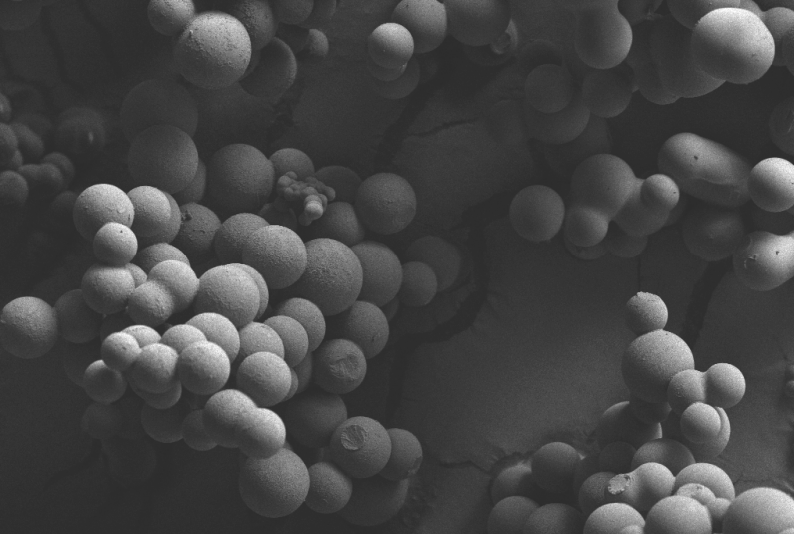
What is nanotechnology, examples and applications

Nanotechnology has gone from being a scientific promise to becoming a key tool for transforming industries. From water treatment to biogas production, its advances are redefining how we manage resources and care for the environment. In this scenario, Calpech positions itself as a pioneering company that combines decades of research with a business vision to bring this innovation into practice. If you want to learn more about nanotechnology you can’t miss this post in which we tell you: what nanotechnology is and what its main applications are.
What is nanotechnology
Nanotechnology is the area of science and engineering that studies, designs and manipulates materials at an extremely small scale, between 1 and 100 nanometers. At this level, materials can exhibit unique properties (such as greater strength, reactivity or conductivity) that enable the development of innovative solutions for sectors such as the environment, energy, medicine or industry.
This discipline combines knowledge from physics, chemistry, biology and engineering to transform processes and products, offering improvements in efficiency, sustainability and profitability. In the environmental field, for example, nanotechnology makes it possible to create more effective systems to purify water, valorize waste and optimize the production of clean energy.
What nanotechnology consists of
Working at a nanometric scale involves designing and producing materials and devices with almost atomic precision. In this range, the surface-to-volume ratio increases noticeably, which makes it possible to develop more efficient catalysts, protective coatings and filtering membranes capable of selectively removing contaminants.
In the environmental industry, this technology is driving more sustainable processes, such as advanced water purification, emissions reduction or the optimization of energy production from waste.
History of nanotechnology
Although its foundations date back centuries, the modern concept of nanotechnology began to take shape in the mid-20th century. Richard Feynman’s 1959 lecture and the later work of Norio Taniguchi laid the groundwork for manipulating materials at the nanometric scale. The decisive advance came in the 1980s with the scanning tunneling microscope, which made it possible to observe and work directly on individual atoms.
Since then, this technology has evolved rapidly, expanding from the laboratory into sectors such as medicine, energy, electronics and, especially, the environment.
Types of nanotechnology
Nanotechnology can be classified into different categories depending on the type of materials it works with and the focus of its development:
Dry nanotechnology
It uses inorganic materials such as metals, semiconductors, ceramics or carbon (nanotubes, graphene), common in electronics, engineering and energy.
Wet nanotechnology
It works with organic compounds and biological systems such as DNA or proteins, key in biomedicine, agriculture and water treatment.
Computational nanotechnology
It uses simulations to design and optimize nanomaterials, reducing costs and development times.
Manufacturing nanotechnology
Focused on large-scale production, it uses techniques such as molecular assembly, lithography or advanced printing.

Examples of nanotechnology
Nanotechnology can be applied to a wide variety of materials and processes. Some of the most representative examples that are already part of our daily lives and industry are:
- Water filters with nanomembranes capable of removing viruses, bacteria and heavy metals with efficiency far superior to conventional systems.
- Hydrophobic and oleophobic coatings on textiles, glass or metal surfaces that repel water and dirt, increasing their durability.
- Paints and coatings with nanoparticles that offer antibacterial properties, corrosion resistance and self-cleaning.
- Solar panels with nanometric layers that optimize light capture and improve energy efficiency.
- Controlled release drug delivery systems using nanoparticles that act directly on affected areas, reducing side effects.
Applications of nanotechnology
Nanotechnology is present in a growing number of sectors thanks to its ability to improve material performance, optimize processes and create solutions that were previously unthinkable. Some of the most notable are:
Environment
In the environmental field, nanotechnology has opened the door to more efficient and sustainable systems. Its main uses include:
- Water purification using nanomembranes and nanoadsorbents that remove contaminants such as heavy metals, pesticides or microorganisms.
- Treatment of gases and emissions thanks to nanocatalysts that reduce the release of harmful compounds into the atmosphere.
- Optimized biogas production by applying nanoparticles that accelerate and improve the performance of anaerobic digestion.
- Waste valorization to transform it into high value-added products, such as fuels or reusable materials.
In this field, Calpech is a benchmark. Its technology combines nanotechnology and industrial processes to convert organic waste into energy resources, reducing environmental impact and generating economic benefits for companies.
Applications in medicine
In health, nanotechnology has enabled the development of more precise and less invasive treatments:
- Nanoparticles for controlled drug release.
- Nanomaterials for tissue regeneration and bone repair.
- Biomedical sensors for fast and reliable diagnostics.
Applications in industry
In the industrial sector, this technology helps manufacture materials that are stronger, lighter and more durable:
- Protective coatings against corrosion and wear.
- Nanocomposites that improve the mechanical properties of parts and structures.
- Smaller, faster and more efficient electronic components.
Benefits of nanotechnology
Nanotechnology brings significant advantages that explain its rapid expansion in sectors as diverse as the environment, medicine or industry. Among the most notable benefits are:
Greater efficiency
Nanomaterials have enhanced properties, such as greater strength, conductivity or reactivity, which optimizes processes and reduces losses.
Energy savings
Working at the nanometric scale allows the development of solutions that consume less energy and operate more quickly.
Sustainability
It reduces waste generation and facilitates the valorization of by-products, contributing to the circular economy.
New functionalities
From antibacterial properties to corrosion resistance or contaminant filtration capacity.
Profitability
Many solutions based on nanotechnology reduce costs in the medium and long term, generating an attractive return on investment.
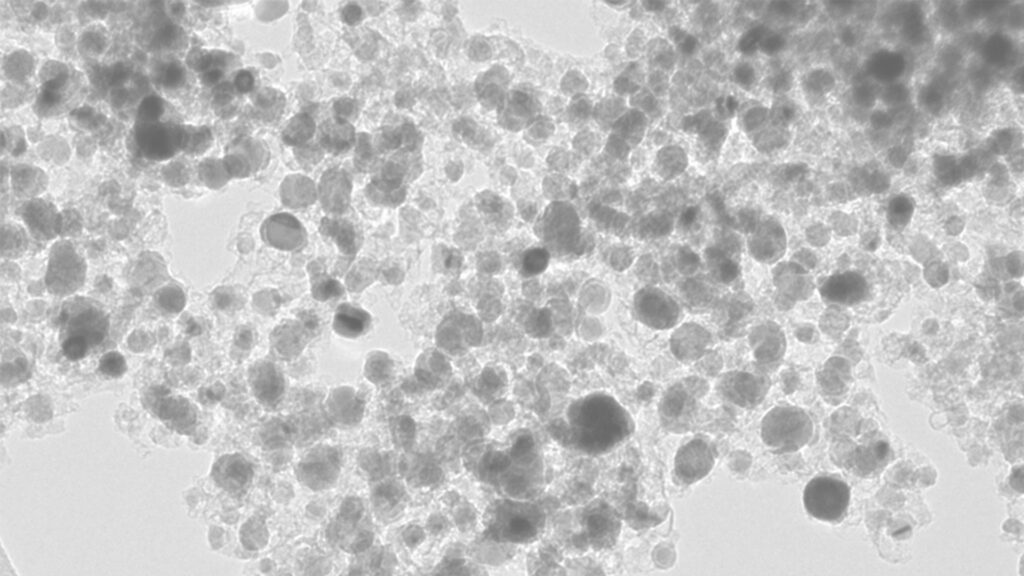
How nanotechnology is applied
Nanotechnology can be integrated into a wide range of processes, from the development of new materials to the optimization of industrial systems. Its advantages translate into more efficient, sustainable and profitable solutions.
In the environmental sector, it is applied to:
- Water treatment with nanomembranes and nanoadsorbents.
- Biogas optimization using nanoparticles that improve performance.
- Waste valorization into high-value fuels or fertilizers.
- Emissions reduction with more effective nanocatalysts.
It is also used in medicine (controlled drug delivery, diagnostic sensors) and in industry (protective coatings, stronger and more efficient materials).
Calpech adapts these solutions to each client, integrating them into existing processes to facilitate implementation and profitability.
Notable companies in nanotechnology
On the international scene there are leading companies in biomedicine, energy and advanced materials. In the environmental sector, Calpech stands out for combining more than 30 years of research with a business vision focused on results. Its approach integrates nanotechnology into real processes to optimize biogas production, valorize waste and reduce emissions, offering sustainable and profitable solutions for companies and institutions.
Challenges and the future of nanotechnology
Although its potential is enormous, nanotechnology faces important challenges: ensuring the safety of nanomaterials, establishing clear regulations and reducing production costs for its mass adoption.
The future points to an ever greater integration in key sectors such as energy, medicine and the environment, with a central role in the circular economy and the transition to more sustainable models.
On this path, Calpech is poised to lead the application of nanotechnology in the environmental sector, demonstrating that innovation can be both efficient, profitable and respectful of the planet.
Our experience of more than 30 years in research, combined with a business approach, allows us to turn environmental challenges into opportunities for our clients.
If you want to discover how our solutions can help you optimize processes, reduce impact and generate value, we invite you to learn more about Calpech and our projects on our website. The sustainable future is built today, and it begins at the nanometric scale.
Related Posts
También te puede interesar
Why is Spain still far…
Read MoreComparison between biogas and other…
Read MoreReducing costs with nanoparticles in…
Read MoreIncreasing biogas with iron nanoparticles
Read MoreManagement of Agroindustrial Sludges and…
Read MoreProcess Improvements in Anaerobic Digestion
Read More